Polarization Intensity Stabilization – What It Is
The QS series employs a laser tube that oscillates in two polarization modes (P- and S-polarized). By applying the polarization intensity stabilization method for frequency stabilization, it achieves:
- Frequency stability of 10-9
- A wide stabilized operating range
Principle of Polarization Intensity Stabilization
The polarization intensity stabilization method separates and detects the two polarizations (P-polarization & S-polarization) present in the output beam. It controls the system so that the intensity ratio between them remains constant.
The magnitude of the Ne gain curve changes as shown in Fig. 1—in the short term due to temperature variations, and in the long term due to aging effects such as gas depletion.
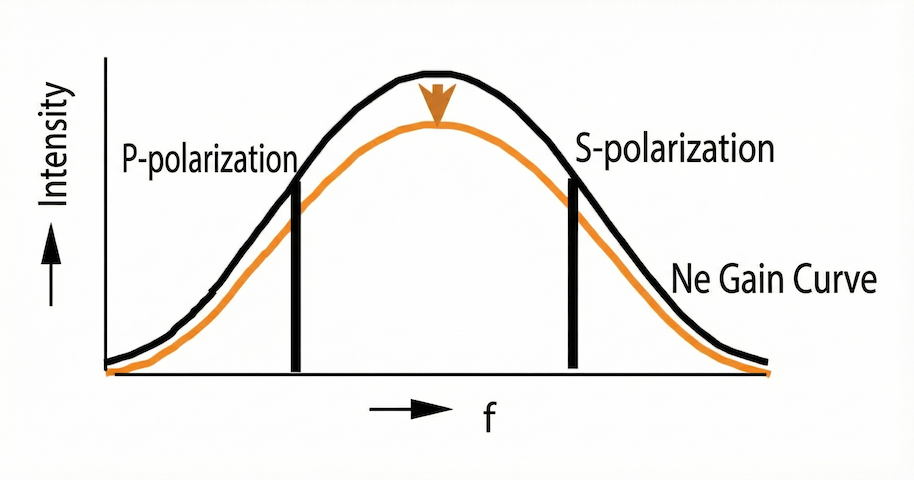
In stabilization schemes that maintain a constant intensity for only one polarization, the stabilized frequency point shifts as the Ne gain curve changes. In contrast, with polarization intensity stabilization, the changes in P- and S-polarized intensities caused by variations in the Ne gain curve are effectively canceled, thereby suppressing the drift of the stabilized frequency point.
Overview of Polarization Intensity Stabilization
Based on the QS system configuration (Fig. 2), the stabilization control operates as follows:
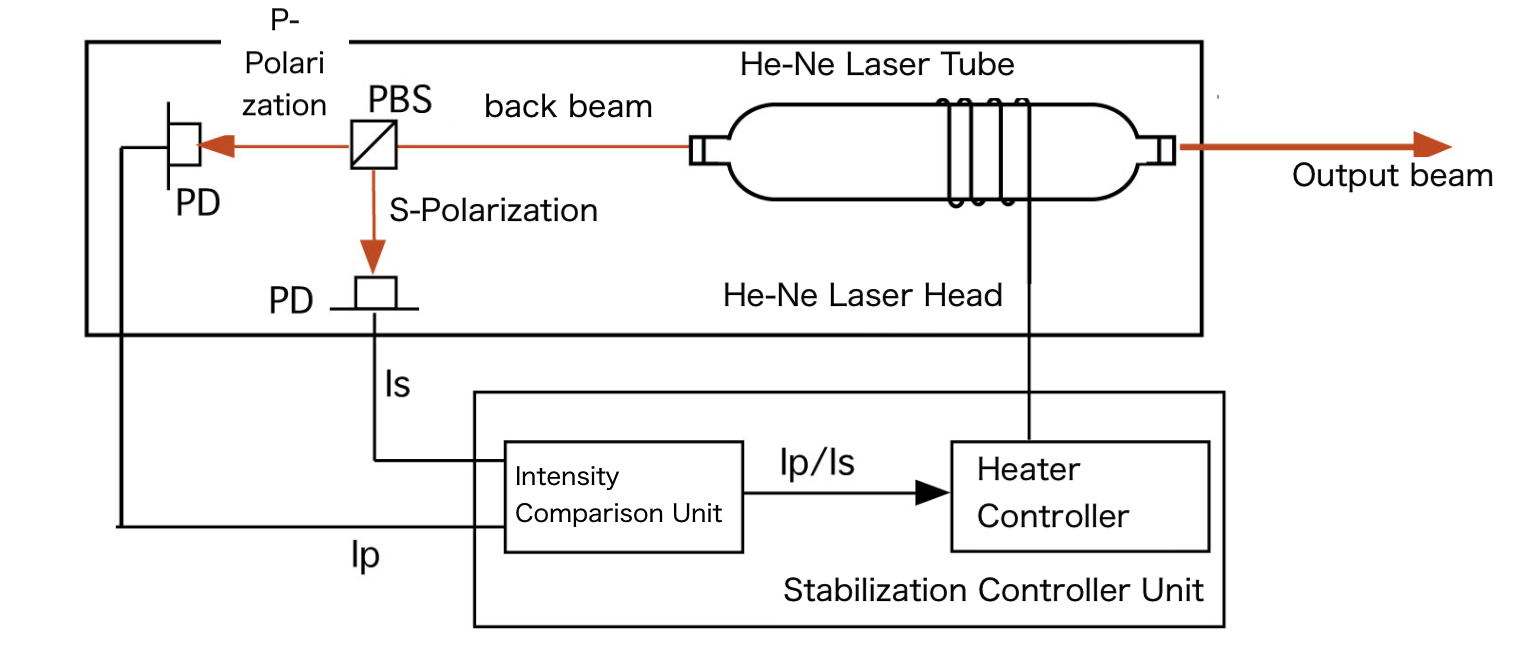
- The two polarizations in the back beam are split by a polarizing beam splitter (PBS), and their intensities, Ip and Is, are detected by PiN photodiodes (PDs).
- The stabilization circuit applies feedback to maintain a constant ratio of Ip/Is.
Technologies that Support Stabilization
Two-stage stabilization robust to ambient temperature variation
The QS series uses a two-stage control scheme: (1) conventional proportional control, and (2) a proprietary nonlinear-gain integral control. This locks the Ip/Is signal to a constant setpoint regardless of ambient temperature variations. With proportional control alone, the Ip/Is signal fluctuates with temperature changes (Fig. 3(a)).
The two-stage control is designed to reduce sensitivity to ambient temperature changes (Fig. 3(b)).
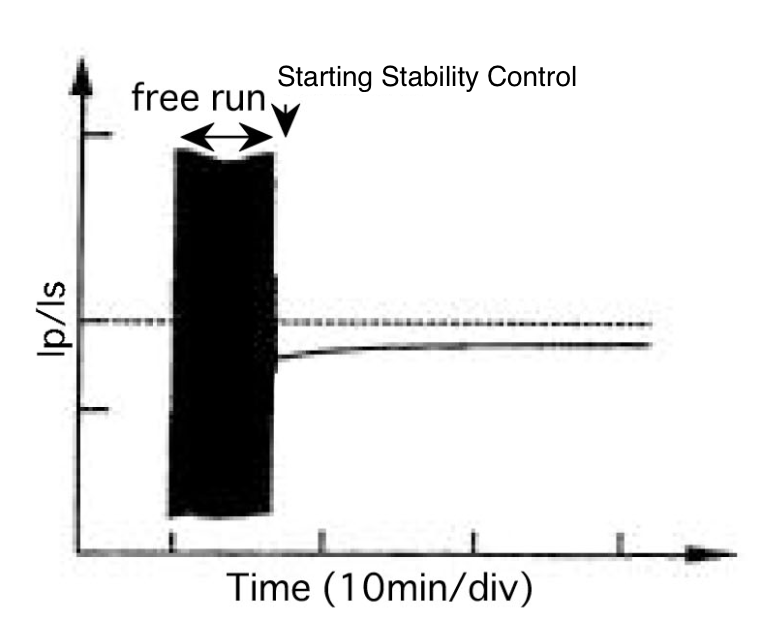
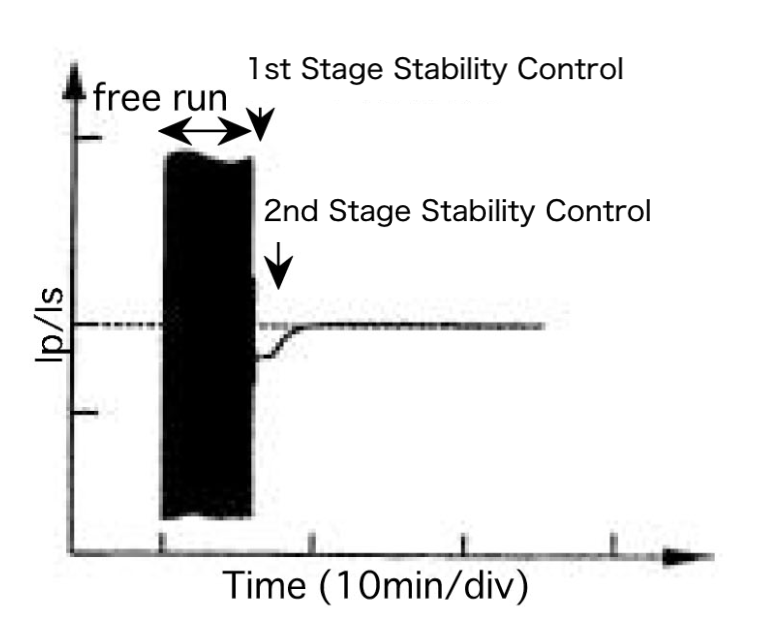
Fig. 3 Comparison of Stabilization Schemes
Dual-heater architecture to broaden the operating temperature range
The QS series uses two heaters (main and sub) to control the cavity length. The main heater performs stabilization, while the sub heater compensates for ambient temperature drift. This dual-heater design expands the effective operating range of the two-stage control.
Our measurements confirm proper operation over a range of ±20 °C centered around the starting temperature (25 °C).
Excellent Frequency Stability
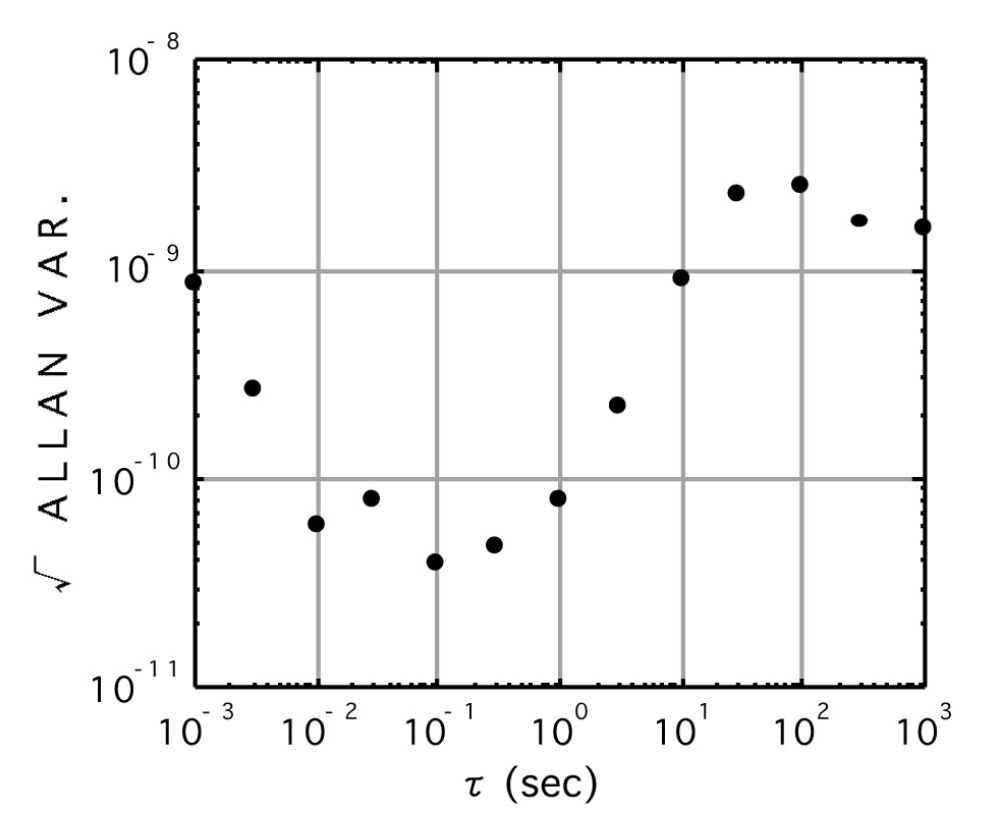
With the stabilization controls described above, the QS series achieves high stability of 10-9 across a wide range of averaging times (from 0.001 s to 10 s).